 0
0
 0
0
Your basket is empty...
| Packing Material | Particle Size (µm) | Pore Size (Å) | Surface Area (m2/g) | Carbon Load (%) | pH Range |
|---|---|---|---|---|---|
| Plus C18 | 1.7, 2.2, 3, 5, 10, 15 | 100 | 420 | 18 | 1.5-10 |
| Polar C18 | 2.2, 3, 5, 10, 15 | 120 | 325 | 16 | 1.5-7.0 |
| C8 | 3, 5 | 120 | 325 | 11 | 2.0-7.0 |
| Phenyl-butyl | 2.2, 3, 5 | 100 | 300 | 12 | 1.5-7.5 |
| NH2 | 2.2, 3, 5 | 120 | 325 | 5 | 2.0-6.5 |
| CN | 3, 5, 10 | 120 | 325 | 8 | 2.0-7.0 |
| HILIC Plus | 2.2, 3, 5 | 120 | 420 | - | 1.5-7.0 |
| Si | 2.2, 3, 5, 10 | 100 | 420 | - | 1.5-7.0 |
More information is available at www.arionchromatography.com. You will find Column care guide there.
| Packing Material | Particle Size (µm) | Pore Size (Å) | Surface Area (m2/g) | Carbon Load (%) | pH Range |
|---|---|---|---|---|---|
| CHROMSHELL® C18 Plus | 2.6 | 85 | 130 | 9 | 1.5-7.5 |
| CHROMSHELL® C18-XB | 2.6 | 85 | 130 | 8 | 1.5-8.0 |
| CHROMSHELL® C18-AB | 2.6 | 85 | 130 | 6 | 1.5-8.0 |
| CHROMSHELL® C18 Polar | 2.6 | 85 | 130 | 6.5 | 1.5-7.0 |
| CHROMSHELL® HILIC | 2.6 | 85 | 130 | - | 1.5-7.0 |
| CHROMSHELL® Si | 2.6 | 85 | 130 | - | 1.5-7.0 |
| Packing Material | Particle Size (µm) | Pore Size (Å) | Effective Surface Area (m2/g) | Carbon Load (%) | pH Range |
|---|---|---|---|---|---|
| Kinetex XB-C18 | 5, 2.6 | 100 | 200 | 10 | 1.5-8.5* |
| Kinetex C18 | 5, 2.6 | 100 | 200 | 12 | 1.5-8.5* |
| Kinetex C8 | 2.6 | 100 | 200 | 8 | 1.5-8.5* |
| Kinetex PFP | 5, 2.6 | 100 | 200 | 9 | 1.5-8.5* |
| Kinetex HILIC | 2.6 | 100 | 200 | 0 | 2.0-7.5 |
| Kinetex Phenyl-Hexyl | 5, 2.6 | 100 | 200 | 11 | 1.5-8.5* |
* Columns are pH stable from 1.5 to 10 under isocratic conditions. Columns are pH stable from 1.5 to 8.5 under gradient conditions.
Kinetex 2.6µm columns with ID 2.1mm are pressure stable up to 1000 bar, otherwise up to 600 bar.
Kinetec chore-shell colums can be replace by new ChromShell colums. Just try it.
| Packing Material | Particle Size (µm) | Pore Size (Å) | Surface Area (m2/g) | Carbon Load (%) | pH Range | USP Packing |
|---|---|---|---|---|---|---|
| Luna Phenyl-Hexyl | 3,5,10,15 | 100 | 400 | 17.5 | 1.5-10.0 | L11 |
| Luna Silica (2) | 3,5,10,15 | 100 | 400 | - | - | L3 |
| Luna C5 | 5,10 | 100 | 440 | 12.5 | 1.5-10.0 | - |
| Luna C8 | 5,10 | 100 | 440 | 14.75 | 1.5-10.0 | L7 |
| Luna C8 (2) | 3,5,10,15 | 100 | 400 | 13.5 | 1.5-10.0 | L7 |
| Luna C18 | 5,10 | 100 | 440 | 19 | 1.5-10.0 | L1 |
| Luna C18 (2) | 2.5,3,5,10,15 | 100 | 400 | 17.5 | 1.5-10.0 | L1 |
| Luna CN | 3,5,10 | 100 | 400 | 7.0 | 1.5-10.0 | L10 |
| Luna NH2 | 3,5,10 | 100 | 400 | 9.5 | 1.5-11.0 | L8 |
| Luna SCX | 5,10 | 100 | 400 | 0.55% Sulfur Load | 2.0-7.0 | L9 |
| Luna HILIC | 3,5 | 200 | 200 | - | 1.5-8.0 | - |
| Luna PFP(2) | 3 5 | 100 | 400 | 5.7 | 1.5-8.0 | L43 |
| Packing Material | Particle Size (µm) | Pore Size (Å) | Surface Area (m2/g) | Carbon Load (%) | pH Range | USP Packing |
|---|---|---|---|---|---|---|
| Gemini C18 | 3,5,10 | 110 | 375 | 14 | 1.0-12.0 | L1 |
| Gemini C6-Phenyl | 3,5 | 110 | 375 | 12 | 1.0-12.0 | L11 |
| Gemini NX | 3,5,10 | 110 | 375 | 14 | 1.0-12.0 | L1 |
| Packing Material | Particle Size (µm) | Pore Size (Å) | Surface Area (m2/g) | Carbon Load (%) | pH Range | USP Packing |
|---|---|---|---|---|---|---|
| Synergi Max-RP | 2.5 | 100 | 400 | 17 | 1.5-10.0 | - |
| Synergi Hydro-RP | 2.5 | 100 | 400 | 19 | 1.5-7.5 | L1 |
| Synergi Polar-RP | 2.5 | 100 | 440 | 11 | 1.5-7.0 | L11 |
| Synergi Fusion-RP | 2.5 | 100 | 440 | 12 | 1.5-10.0 | L1 |
| Synergi Max-RP | 4,10 | 80 | 475 | 17 | 1.5-10.0 | - |
| Synergi Hydro-RP | 4,10 | 80 | 475 | 19 | 1.5-7.5 | L1 |
| Synergi Polar-RP | 4,10 | 80 | 475 | 11 | 1.5-7.0 | L11 |
| Synergi Fusion-RP | 4,10 | 80 | 475 | 12 | 1.5-10.0 | L1 |
| Packing Material | Macropore Size (µm) | Pore Size (Å) | Surface Area (m2/g) | Carbon Load (%) | pH Range | USP Packing |
|---|---|---|---|---|---|---|
| Onyx Silica | 2 | 130 | 300 | 0 | 2.0-7.5 | - |
| Onyx C8 | 2 | 130 | 300 | 11 | 2.0-7.5 | - |
| Onyx C18 | 2 | 130 | 300 | 18 | 2.0-7.5 | - |
| Packing Material | Particle Size (µm) | Pore Size (Å) | Surface Area (m2/g) | Carbon Load (%) | pH Range | USP Packing |
|---|---|---|---|---|---|---|
| Jupiter C4 | 5,10,15 | 300 | 170 | 5.0 | 1.5-10.0 | L26 |
| Jupiter C5 | 5,10,15 | 300 | 170 | 5.5 | 1.5-10.0 | - |
| Jupiter C18 | 5,10,15 | 300 | 170 | 13.3 | 1.5-10.0 | L1 |
| Jupiter Proteo C12 | 4,10 | 90 | 475 | 15.0 | 1.5-10.0 | - |
| Packing Material | Particle Size (µm) | Pore Size (Å) | Surface Area (m2/g) | Carbon Load (%) | pH Range | USP Packing |
|---|---|---|---|---|---|---|
| GraceSmart C18 | 3,5 | 120 | 220 | 10 | 2.0-9.0 | L1 |
| Packing Material | Particle Size (µm) | Pore Size (Å) | Surface Area (m2/g) | Carbon Load (%) | pH Range | USP Packing |
|---|---|---|---|---|---|---|
| Prevail C18 | 3,5 | 110 | 350 | 17 | L1 | |
| Prevail C18 Select | 3,5 | 110 | 350 | 15 | L1 | |
| Prevail C8 | 3,5 | 110 | 350 | 8 | L7 | |
| Prevail Phenyl | 3,5 | 110 | 350 | 7 | L11 | |
| Prevail Cyano (CN) | 3,5 | 110 | 350 | - | L10 | |
| Prevail Amino (NH2) | 3,5 | 110 | 350 | - | L8 | |
| Prevail Silica | 3,5 | 110 | 350 | - | L3 | |
| Prevail Organic Acid | 3,5 | 110 | 350 | - | - | |
| Carbohydrate ES (polymer) | 5 | - | - | - | - |
| Packing Material | Particle Size (µm) | Pore Size (Å) | Surface Area (m2/g) | Carbon Load (%) | pH Range | USP Packing |
|---|---|---|---|---|---|---|
| ProteCol C18 | 3 | 120/300 | 350 | 17 | 2.0-7.5 | L1 |
| ProteCol C8 | 3 | 120/300 | 350 | 10 | 2.0-7.5 | L7 |
| ProteCol C4 | 3 | 120/300 | 350 | 2.0-7.5 | L26 | |
| ProteCol SCX | 3 | 120/300 | 350 | 2.0-7.5 | L9 |
Dosing pumps are used in many applications, in laboratories and within industry. Often we see the needs, when we require dose liquids under specific conditions:
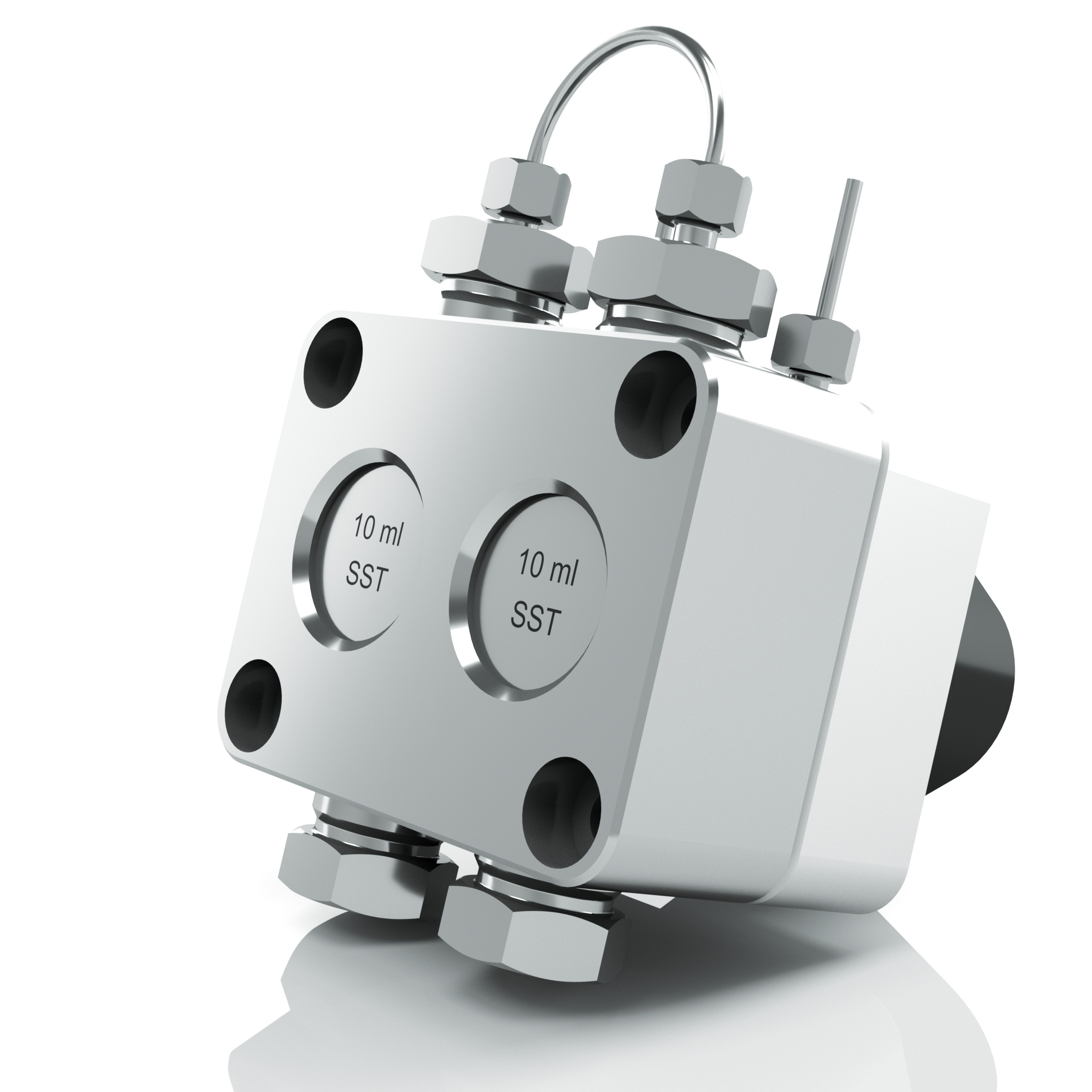 For all above mentioned applications it is possible to use technology that has been proven in the area of high performance liquid chromatography (HPLC). These are double-piston pumps AZURA (Knauer), which use sphire pistons enabling precise continuous dosing under high pressure. These pumps can work with flow of 0,01 to 1000 ml/min, under temperatures of -10°C to +120°C and with viscous media up to 1000 mPa.s.
The pumps can be especially equipped so they can be used in specific application like hazardous areas.
Nice example of use of AZURA pumps is dosing of sulphur trioxide in production of methanesulfonic acid (MSA).
Pump head are available in following materials:
Further information about models are available here.
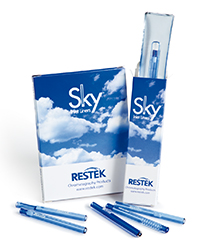 True Blue Performance
Exceptionally inert, Topaz™ inlet liners, with a new state-of-the-art deactivation,improve trace level analysis.
When faced with complex choices, simple solutions stand out. TOPAZ™ inlet liners from Restek use a comprehensive, state-of-the-art deactivation and are the only blue liners on the market-making them an easy-to-recognize solution to common inlet problems.
The innovative deactivation used for TOPAZ™ liners results in exceptional inertness for a wide range of analyte chemistries. By reducing active sites and enhancing analyte transfer to the column, these liners increase accuracy and precision, allowing lower detection limits for many active compounds. In addition to improved data quality, you’ll benefit from fewer liner changes and less downtime for maintenance.
Selecting the right liner for your application can be a challenging task. TOPAZ™ inlet liners make the choice simple; the comprehensive deactivation, distinctive colour, and availability in popular configurations mean TOPAZ™ liners are the best choice for optimizing chromatographic performance. Regardless of your application, TOPAZ™ liners provide reliable inertness and assured performance, dayafter-day and analysis-after-analysis.
Here you will find more information about stationary phases used in reversed phase Flash chromatography.
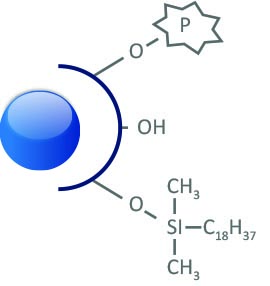
puriFl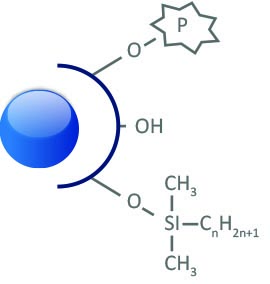 ash® RP-AQ
60Å - 500 m2/g
15 & 30 μm
RP-alkyl, 6% Carbon
End-capping: mixed
pH stability: 2.0 to 7.5
Separation/purification of strongly and moderately polar molecules.
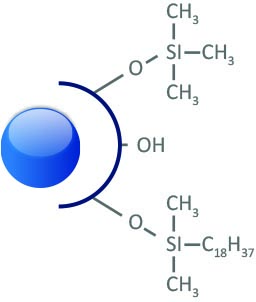
puriFlash® C18-AQ
100Å - 300 m2/g
5, 10, 15 & 30 μm
C18 mono-functional, 14% Carbon
End-capping: mixed
pH stability: 2.0 to 7.5
Separation/purification of moderately polar and non-polar molecules.
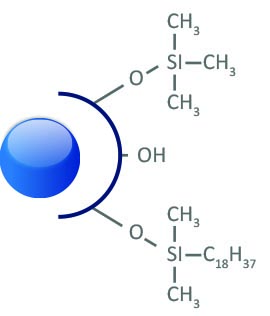
puriFlash® C18-HP
100Å - 300 m2/g
5, 10, 15, 30 & 50 μm
C18 mono-functional, 16,5% Carbon
End-capping: one-step
pH stability: 1.5 to 7.5
This is an excellent choice for routine reverse phase purifications.
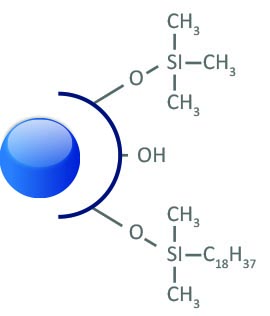
Uptisphere® Strategy™ C18-HQ
100Å - 425 m2/g
1.7, 2.2, 3, 5, 10, 15 μm
C18 mono-functional, 19% Carbon
End-capping: multi-step
pH stability: 1.0 to 10.0
Suitable for many pharmaceutical applications and routine methods.
puriFlash® C18-XS
100Å - 300 m2/g
5, 10, 3, 15 & 30 μm
C18 mono-functional, 17% Carbon
End-capping: multi-step
pH stability: 1.0 to 10.0
It is an excellent phase for the complete separation of basic molecules.
There are mor phases available. Contact us for more information for suitable stationary phase for Flahs/Purification chromatography.
 Task for preparative HPLC systems differs to analytical one. While analytical HPLC task is qualitative and quantitative determination of defined compounds in samples, preparative HPLC task is separation, purification and isolation of value products from mixtures.
Preparative chromatography can be devidet into three main areas:
| Parameter | Analytical | Semi-preparative | Preparative |
|---|---|---|---|
| Column sizes (mm) | 120 - 250 x 2 - 4.6 | 120 - 250 x 8 - 16 | 120 - 250 x 20 - 62 |
| Particle size (µm) | up to 5 | 5 - 10 | higher than 10 |
| Stationary phase (g) | up to 5 | 5 - 30 | 50 - 450 |
| Tubings | 1/16" | 1/16" | 1/8" |
| Flow rates (ml/min) | 0.1 - 2 | 5 - 50 | 100 - 1000 |
| Sample size (mg) | 0.01 - 2 | 0.1 - 50 | 1 - 700 |
| Flow cell (mm) | 10 | 3 | 0.5 - 2 |
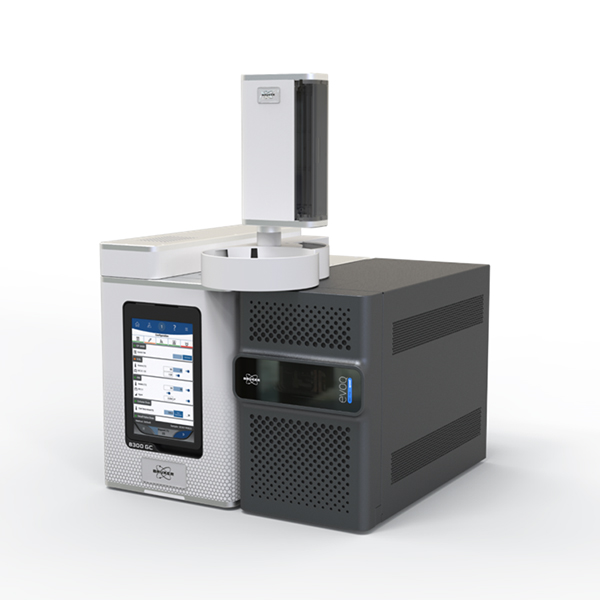
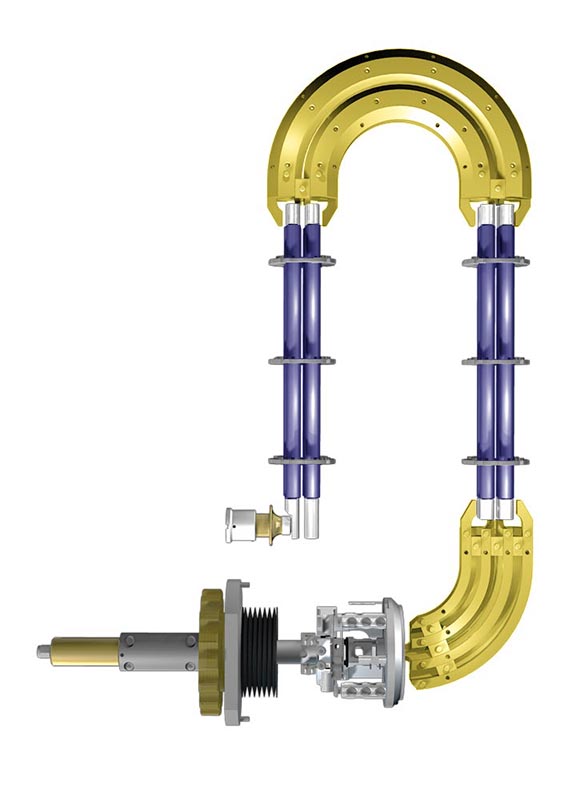 The principle of Triple Quadrupole (TQ) is explained on EVOQ™ system by Bruker. The key points of the system are:
 The UHPLC technology requires far better quality solvents than what is currently available on the market. Biosolve ULC/MS solvents, buffers and acids line combine the highest demands for:
ULC/MS solvents, are micro filtered at 0,1 µm, have a residue after evaporation of max. 1 ppm and are packed under inert gas for better shelf-life. Besides the standard 2,5 l packaging, Biosolve is now offering for nano LC/MS:
Information about the reagencies are available. Just ask for it.
Audible noise, random ghost peaks, low sensitivity. These are typical characteristics of dirty FID detector.
The most common cause contamination sulfide is bleeding from the column. Burned stationary phase may be deposited on the nozzle surface of the detector and cause problems. However, the nozzle napalují and other contaminants.
The above-described problems, however, may not only be caused by contamination of the detector. The steps outlined below will help rule out other potential causes.
Possible source of contamination can be found not only in the detector itself, but also in front of him. Bleeding stationary phase column, septum, inlet contaminated, contaminated carrier gas ... To eliminate this source Blind FIDU corresponding input plug and turn the FID. If the problem ceases, search problem outside detector. No need to replace the liner? Septum? Clean inlet? What is the state column? Do you have a pure carrier gas? You do not have a leak in the system?
Even hydrogen and air used in the sulfide can be a source of contamination. Attention: especially when problems emerged after replacing the cylinder.
Also improper flow / pressure of the two gases can be a source of increased noise and reduced sensitivity to ignition problems sulfide. Make flows through the meter.
I electrical interference may exhibit similar symptoms dirty FID. There may be a defect electrometer, poor contact or interference by other devices in the lab.
ECD is a specific and sensitive detector. Inappropriate behavior, however, can sharply reduce its lifespan. The gradual increase in signal at this detector normal. However, if an increase occurs abruptly or adding more of the symptoms worsening-noise desensitization search problem.
The selection of suitable syring tip is mentioned in Hamilton catalogue. Please, ask for this catalogue.